News

2019, Erin Edgerton/The Daily Progress

A former employee of Sugar Shack Donuts is accusing the company’s CEO of sexual harassment and discrimination in a federal civil rights lawsuit.

The suit, filed Monday in U.S. District Court in Richmond, alleges that Ian Kelley, the CEO and a founder of the Chesterfield County-based company, promoted an 18-year-old part-time employee to the position of store manager and used that promotion as leverage to start a sexual relationship with her. The woman claims she was fired after she filed a complaint about the relationship, which she claims also included an apartment secretly paid for by the company.

The 10-page complaint by Virginia Williams names Sugar Shack Donuts LLC; SSD Staffing LLC, which handles the company payroll; and Kelley as defendants.

“We are working with our attorneys to respond to these baseless claims,” Kelley said in an email.

Williams, a Richmond resident, began working part time for Sugar Shack in 2016 when she was 17 years old, then switched to full-time work there after graduating high school the next year, according to the suit.

In October 2011, Terry tore his meniscus while on the job. The knee injury limited his ability to walk, but he continued to work after his supervisor assigned him to shop duty at the DPU facility. The arrangement persisted as the effects of Terry’s injury lingered and his mobility was hampered, according to the lawsuit.

At various times she worked in the Midlothian, Hanover and Parham Road locations and in mobile operations.

Kelley, who the lawsuit notes was about 32 years old and married with children, “allegedly paid unusually close attention to Williams when he visited her job sites” and repeatedly asked her about her romantic relationships.

Williams turned 18 in July 2017 and planned to leave the area and her Sugar Shack job to attend college in another part of the state, the suit said. Kelley, according to the suit, promised to promote her to be the manager of a store that was planned to be opened in Charlottesville.

The suit said she decided to stay and work for Sugar Shack and waited for the new location to open.

Williams alleges that in the summer of 2018, Kelley asked her to perform oral sex on him and implied, according to the suit, that he had given her a significant job advance and that she needed to show him gratitude.

“Feeling that she would lose her job and/or promotion if she did not comply, Williams felt she had no choice but to agree to his request,” the suit alleges.

The suit claims Kelley also secretly arranged for the company to pay for most of Williams’ apartment rent and from June 2018 through January 2019 he continued to request Williams to perform oral or manual sex on him.

Williams also texted sexual pictures of herself to Kelley at Kelley’s request, according to the lawsuit.

Williams said that in January 2019 she complained to the company’s district manager about the alleged sexual harassment and hostile work environment.

The suit says that in early 2019, Kelley became involved in disputes with other owners of the company and disengaged from the day-to-day operations of the company. Two lawsuits were filed against Kelley and Sugar Shack in 2019 by an investor and former partner.

The company brought in a human resources consultant to examine Kelley’s personnel practices, according to the 2020 suit. According to the suit, Williams reported Kelley’s alleged sexual harassment to the consultant and a minority owner of Sugar Shack. But the suit alleges there was no follow up and that Williams was never informed of the results of any further investigation.

In July 2019, Williams alleges that Kelley began to re-engage in the operations of the company and “took a series of retaliatory actions against Williams to try to force her to contact him.” The actions, the suit alleges, included removing her access to the company’s computer system, email account and social media accounts.

In September 2019 Williams filed a complaint with the Equal Employment Opportunity Commission charging sex discrimination and retaliation.

After that, the retaliation escalated, according to the lawsuit.

In November, she was told her store would be temporarily closed because it had lost its ABC license and then the following month the store was closed permanently and Williams was fired, she alleges.

She claims she requested jobs at other Sugar Shack locations that were hiring but she was turned down and later learned that Kelley had told managers not to hire her.

The case has been assigned to U.S. District Judge Robert E. Payne. Williams is asking for a jury trial.

The suit is seeking $200,000 in compensatory and punitive damages for the alleged sexual harassment and retaliation allegations, plus back pay still owed her as well as $350,000 in punitive damages for wrongful discharge.

Michael Schwartz

The battle between LeClairRyan and one of its former attorneys continues, even as the law firm has collapsed into bankruptcy.

Michele Craddock, who successfully fought a gender discrimination case against the once-sizable firm prior to its demise, is still fighting to collect on the $1.02 million in damages awarded to her in the matter last year by an arbitration panel.

Some legal back and forth over attorney’s fees caused a delay in the case and LCR fell into bankruptcy in early September before the law firm ever paid out.

Now Craddock, who worked for the firm from 2003 to 2015 and since has gone into private practice with her husband and former LCR attorney John Craddock, is fighting to have the last leg of her dispute play out outside the confines of bankruptcy.

She filed for a relief from stay, which would allow her to not have to wait in line with other creditors to get what she’s owed. The arbitration award, which includes around $342,000 for Craddock and $678,000 for her attorneys, is to be paid by insurance policies that LCR maintains it had in place to cover such a dispute and that money should not be part of the bankruptcy estate.

However, Craddock’s attorney say the firm to this point has refused to share the insurance documents that prove the policy was in place as asserted during the case.

If insurance doesn’t cover it, Craddock would likely become one of LCR’s largest unsecured creditors and would be forced to get in line with the rest of those owed money by the bankruptcy estate.

Further delaying the matter, LCR’s bankruptcy case is now headed for a conversion from Chapter 11 to Chapter 7, as approved by a federal judge in Richmond last week. The case will convert Oct. 4, allowing a trustee to take the reins of what’s left of the firm and dig for assets to be paid back to creditors.

The conversion, however, could ultimately clear a smoother path for Craddock’s efforts, as it will be up to the Chapter 7 trustee as to whether to push back against Craddock’s motion or let her pursue it outside of the liquidation process.

Since filing for Chapter 11 on Sept. 3, LCR’s bankruptcy has been handled by attorneys from Hunton Andrews Kurth, as well as a two-person dissolution committee made up of former LCR attorneys.

A Chapter 7 trustee will take over those responsibilities and begin to formally liquidate the scraps of the firm, which largely consist of accounts receivables.

The 30-year-old firm, which shut down in the face of mass defections, lists a range of 200-999 creditors owed between $10 million and $50 million combined. The firm claims assets of $10 million to $50 million. It has yet to file a full report of its debts and assets.

Its largest secured creditors are lender ABL Alliance, which loaned the firm $15 million in 2017, and ULX Partners, a joint venture LeClairRyan created last year with legal services technology firm UnitedLex.

Craddock was represented in the gender discrimination case by Harris Butler of Butler Royals. Her filings in the LCR bankruptcy matter are being handled by Mike Wilson of Michael Wilson PLC.

WDBJ

Roanoke City will be handing over $1.2 million as a result of a class action lawsuit over police overtime pay.

In the settlement, released Tuesday, Roanoke agreed to pay the “maximum total amount” in the case. Most of the money, a $792,000 lump sum, will be held for officers allegedly impacted.

The complaint was originally brought in May 2018 by two Roanoke officers, Dawn Renee Wright and Maurice Pendleton.

In the complaint, officers say the City actively concealed labor law rights, and showed a ‘willful disregard of overtime laws.’ The alleged violations date back to “at least 2005.”

At the core of the case, officers say overtime was paid for things like working a crime scene, but was difficult or impossible to collect for more mundane tasks, including filling out paperwork or performing a weapons inspection.

In all, 343 current and former members of the Roanoke Police Department will be eligible to make claims under the terms of the settlement. The rest of the money, $400,000, will go toward the law firms representing the officers, Strelka Law Office and ButlerRoyals.

Tuesday, Roanoke City maintains it didn’t intend to do anything wrong.

In a statement, the City says it “is in the process of implementing several measures that continue to support consistent application of laws and policies governing employee compensation.”

The settlement is still waiting final approval from a judge from the Western District Court, where the complaint was originally filed.

Michael Schwartz

A local executive who claims he was wrongfully ousted from his position near the top of one of Richmond’s biggest privately held companies is headed to trial against his former employer.

Michael Lowery, who until last year was president and COO of Henrico-based industrial foam maker Carpenter Co., is suing the company, and Chairman and CEO Stanley Pauley, for at least $18 million in damages, claiming wrongful termination and defamation.

Lowery claims he was fired in March 2018 after 17 years for speaking out against Pauley’s alleged efforts to collude with others in the foam and related chemicals industry to fix prices.

“Prior to his wrongful discharge, Lowery was a highly successful corporate executive for Carpenter, steering it to record profits,” the lawsuit claims. “However, his career was cut short due to his efforts to prevent the company owner and CEO from engaging in unlawful price-fixing, a practice the company had previously been accused of engaging in, resulting in acknowledgment of European price-fixing and payment of nearly $300 million in fines in Europe and settlements of antitrust actions brought in U.S. Courts.”

The case was filed last September in Henrico County Circuit Court and last month won approval from Judge Richard Wallerstein to head to jury trial. It’s set for April 2020.

Carpenter and Pauley sought to have the case dismissed, but a judge ruled last month it can go on toward a jury trial, which is scheduled for April 13, 2020.

Lowery is represented by attorney Harris Butler of Butler Royals.

Butler, in a prepared statement, said: “We are confident that Henrico jurors will not look favorably on the defendants’ actions – whether in Henrico, or elsewhere in the Commonwealth.”

A message left for Pauley Monday afternoon was not returned.

Carpenter Co. and Pauley are represented by McGuireWoods attorneys Rodney Satterwhite and Robert Holland. Satterwhite did not return a call.

The suit states it is the world’s largest producer of comfort cushioning products and the fifth-largest private company in Virginia, citing a ranking from Virginia Business magazine.

It has 5,000 employees in 47 locations with annual sales of more than $1 billion.

The case claims the company is closely held, with Pauley owning 99 percent of its stock and his children owning the remainder.

Lowery, a VCU grad, who previously worked for Reynolds Metals, worked his way up at Carpenter, holding a position in its credit department, then as CFO, before moving up to president and COO.

The suit claims part of his job in the higher-level position was to institute mandatory antitrust training for Carpenter’s sales personnel.

The company, based at 5016 Monument Ave., has a history of run-ins with authorities over allegations of price fixing, the suit claims. The industry, which makes foam used in furniture, bedding, carpeting and other products, is dominated by a few large competitors, of which Carpenter is one.

In addition to making and selling the foam, Carpenter produces the chemicals needed for the foam and sells it to competitors.

The suit cites an instance in 2010 when Carpenter’s office was raided by the FBI, related to alleged price fixing in the industry. The company and its affiliates ultimately agreed to pay more than $170 million in class-action lawsuits.

It also has acknowledged its participation in a conspiracy from 2005 through 2010 with other foam manufacturers to fix prices in Europe. That resulted in $102 million in fines in 2014, Lowery’s suit states.

Lowery’s trouble at the company apparently peaked in early 2018, when he tried to stop Pauley as the latter was allegedly discussing price increases with others in the industry.

Lowery reported the instance internally, claiming he was following the protocol he helped put in place, but that Pauley “increasingly worked to undermine Lowery and reignite Carpenter’s unlawful price-fixing practices.”

In March 2018, Lowery claims Pauley came to his office with the company’s in-house counsel and said, “It seems to me that your vision and mine are not aligned, so it’s time for you to go.”

Lowery was fired, effective March 31 of that year. He refused to sign a separation agreement. Then it was announced internally that he had retired, which he claims the company knew to be false.

That’s the crux of the defamation claim, the lawsuit argues.

He claims his abrupt departure was “designed to appear as if it were initiated by Lowery himself, suggested to internal executives with no prior knowledge of a planned retirement that plaintiff had engaged in some form of misconduct,” the suit states.

“It suggested to external industry competitors, and potential employers, that he was asked to leave for cause, for life threatening medical reason – or had simply abandoned his responsibilities with an abrupt and unplanned departure inconsistent with how a president/COO of his stature would depart an industry leading manufacturer.”

The suit alleges two counts, one of wrongful termination and one of defamation.

It claims wrongful discharge under state law because he had a duty as an executive to try to prevent alleged attempts at price-fixing.

It claims Lowery has suffered damages in lost wages and reputational damage, as well as emotional distress and humiliation.

He seeks a minimum of $18 million and up to $20.8 million in damages.

Joe Mahoney/Times-Dispatch

The city of Richmond has agreed to pay a former employee $150,000 to settle a lawsuit claiming its administrators violated the Americans with Disabilities Act.

Osby Terry, a former Department of Public Utilities worker, filed the lawsuit in federal court last June. Terry hurt his knee while on the clock, leading to a permanent disability that he claimed the city failed to accommodate as required by federal law before ultimately terminating him, according to his lawsuit.

Richard E. Hill Jr., who represented the city on the matter, confirmed the payout. He declined to provide a copy of the settlement agreement, citing a discretionary exemption in the state’s open record law that allows public bodies to withhold “contracts settling public employee employment disputes held confidential as personnel records.”

Terry sought back pay and an unspecified amount of punitive and compensatory damages. He also wanted to be reinstated to his position with the city. His lawyer, Craig Curwood, declined comment on the settlement.

Terry worked for the Department of Public Utilities from October 2004 to July 2014. As a commercial meter technician, he was responsible for inspecting, replacing or testing gas and water meters either in the field or at a DPU facility in South Richmond. The department employed about a dozen of the workers, and typically assigned at least one or two of them to work at the facility on “shop” duty on any given shift, according to the lawsuit.

In October 2011, Terry tore his meniscus while on the job. The knee injury limited his ability to walk, but he continued to work after his supervisor assigned him to shop duty at the DPU facility. The arrangement persisted as the effects of Terry’s injury lingered and his mobility was hampered, according to the lawsuit.

In late summer 2013, a doctor determined Terry’s knee injury was “permanent.” Soon after, Terry claimed the city notified him he was “unable to. perform the essential functions” of his job, according to the lawsuit.

The federal Americans with Disabilities Act requires employers to accommodate employees with a disability if the disability is known to them and the employee is otherwise qualified to do a job. Depending on what type of disability is at issue, these range from changing the layout of an office where an employee with a disability is assigned to work, providing equipment to assist with the completion of tasks or restructuring an employee’s schedule or job responsibilities.

Under its own guidelines, the city had to determine whether there was another job in the Department of Public Utilities that Terry could perform with his disability. After two months, the city notified Terry it could not find one. Then, the department’s leadership initiated a search to fill his job, according to the lawsuit.

Terry continued working at the DPU facility on shop duty through the search, according to the lawsuit, which states that city administrators never spoke with him about what “reasonable accommodations” the city could provide so he could continue in the role.

The city terminated Terry effective July 11 after determining he could no longer perform the “physical and dexterity requirements” of the position, according to the lawsuit. Those include routine heavy lifting and carrying of objects that are more than 35 pounds, as well as frequently exerting 100 pounds of force, according to a city job description cited in the lawsuit.

In a response to Terry’s initial complaint, the city denied that administrators did not discuss potential accommodations with Terry, who wanted to continue in the position on shop duty as he had for the three years after the injury. But the city’s lawyer argued making any reasonable accommodations for Terry would have “imposed an undue hardship on the city.”

Unsplash

A former LeClairRyan partner who claimed the firm unfairly favors males in compensation decisions has asked a federal court to confirm a $1 million arbitration award that includes more than $700,000 in attorney fees.

Michele Burke Craddock had claimed in a January 2016 lawsuit that a small group of male law firm leaders made such decisions that are “cloaked in secrecy.”

According to Oct. 1 court documents, the arbitration panel awarded nearly $275,000 in back pay, emotional distress damages of $20,000, attorney fees of $701,000 and costs of about $248,000. The amounts don’t include 6 percent interest included in the arbitration award.

The panel concluded that Craddock should have received a substantial pay increase in 2014, and her salary from that year “is the result of intentional discrimination based on gender.” Her pay in 2015, however, was not discriminatory, the panel said.

The panel found the firm violated the federal law preventing gender discrimination in employment, but Craddock had failed to prove violation of the Equal Pay Act. The panel found no violation of the act because Craddock relied on composite statistics rather than adequately identifying a comparative male lawyer who made more money.

“On the face of it,” the arbitration panel said, “the firm’s culture appears propitious for the employment and success of women lawyers.” The firm exceeds averages for women partners, women equity partners, and women associates, and it has women’s and diversity task forces. Some women also have meaningful leadership positions.

“However, notwithstanding this culture, the application of the firm’s compensation policy has had a demonstrable disparate effect on women lawyers,” the panel said.

Compensation data shows that from 2003 to 2016, the firm’s highest-paid female shareholder received significantly less than the highest-paid male shareholder each year. In 2012, female lawyers who had equal or better production numbers than males were paid less total compensation than those men the following year.

In Craddock’s case, she was paid $212,000 in 2013, while two male peers in her entering shareholder class were paid $335,000 and $360,000.

LeClairRyan did not initially give Craddock origination credit for a case known as the Colgate matter, even though Craddock had persuaded the client to remain with LeClairRyan after it had fired the firm. Instead, credit went to the partner who originally brought in the business under an hourly fee arrangement before it was converted to a contingent-fee case, the panel said.

Craddock was on the litigation team, and the case yielded a contingent fee of about $20 million. Craddock eventually got origination credit for the contingency portion of the case—after the male originating partner left the firm in 2013. She was not given credit for hourly work done after she persuaded the client to remain.

The next year, Craddock received a pay increase but didn’t receive the same amount as male shareholders, according to the panel. She also alleged discrimination in 2015 when she was asked to accept a salary reduction.

Had the firm followed its compensation policy, Craddock would have received a substantial pay increase in 2014, the opinion said.

The arbitration panel rejected LeClairRyan’s contention that Craddock isn’t entitled to protection under federal employment laws because she is a shareholder rather than an employee. “During the period Craddock was a Shareholder at LR, she clearly was treated as an employee” who could be terminated at will, the panel decision said.

The law firm’s CEO made decisions with input from a small number of departmental team leaders regarding promotions to shareholder, shareholder base salaries, origination credits and buy-ins, the panel said. Nor did shareholders have any access to information about other shareholders’ decisions.

Lawyers representing LeClairRyan and the firm’s director of marketing didn’t immediately respond to a request for comment.

Unsplash

Civil fraud allegations against a Glen Allen woman and her Richmond-area medical support companies have been settled in a $1 million judgment and a lifetime ban from the Virginia Medicaid Program.

The settlement was approved Tuesday by U.S. District Judge Henry E. Hudson between Dawn Sykes, 43, and the federal and state governments.

From 2010 to 2017, Sykes owned and operated Open Arms Family Support Services LLC, Open Arms Family Day Treatment Support Services LLC, and Open Arms Mental Health Support Services LLC.

The government alleged “multiple fraud schemes” during that period, including submitting Medicaid claims for reimbursement for services that were not provided, Sykes’ payment of kickbacks to win client referrals and submitting claims for reimbursement for services provided to ineligible recipients.

The settlement agreement calls for an initial payment of $50,000 and a consent judgment of $1,061,613 to resolve the civil complaint filed by the state and federal government last year under the False Claims Act and the Virginia Fraud Against Taxpayers Act.

Sykes and her companies were defendants in a lawsuit filed in 2014 under the whistleblower provisions of the federal False Claims Act and the state Virginia Fraud Against Taxpayers Act. The federal and state false-claims acts permit the government to investigate the whistleblower’s allegations and to intervene or to join the litigation. Following a joint investigation, the government intervened.

According to the whistleblower complaint filed by Susana Mulcahey of Henrico, she was an employee of Open Arms for one year prior to her wrongful dismissal in 2013. Mulcahey was employed as a therapeutic day treatment center counselor. She said she was fired after voicing opposition to billing practices and for refusing to participate in fraudulent billings.

The case was investigated by Ray Bowman, Airen Adamonis, Jessica Mackenzie, Candice Deisher, Adele Neiburg, lawyers with the Virginia attorney general’s office and Robert McIntosh, an assistant U.S. attorney.

Records show that Sykes pleaded guilty to theft from a health care benefit program in 2011 in an unrelated scheme that involved kickbacks and a business that sold handicap-accessible vehicles to the Virginia Birth-Related Neurological Injury Compensation Program.

Scott P. Yates

PETERSBURG — The City of Petersburg added another hefty bill to its payment list after a class-action lawsuit between members of the Bureau of Police and the city was settled Jan. 4.

The settlement agreement requires the payment of $1.35 million as recompense for law enforcement officers’ unpaid overtime. Of that amount, $800,000 is to come from the City of Petersburg, with the state Division of Risk Management paying the remaining $550,000.

City spokesman Clay Hamner said Jan. 7 that part of Petersburg’s payment is expected to come from the short-term $6.5 million loan secured by the city from Wells Fargo this December.

Other funds could potentially come from the sale of the city’s water and wastewater assets, a possibility that appeared on the table this December when Aqua Virginia, Inc., sent an unsolicited purchase proposal to the city. Petersburg subsequently advertised for competing bids.

The suit, Thomas Ewers, et al, vs. the City of Petersburg Bureau of Police, was filed a year ago in the U.S. District Court for the Eastern District of Virginia by 28 current and former employees of the Petersburg Bureau of Police. The employees claimed that they had not been paid for the overtime they worked as far back as 2008.

Among other grievances, the complainants claimed that they were regularly required to work more than their scheduled hours and were routinely not paid time and a half for overtime worked, as mandated by federal labor laws.

A city press release issued Jan. 7 states that the Jan. 4 settlement applies to all current and former law enforcement officers employed between Jan. 11, 2013 and June 24, 2016, by the Bureau of Police at the rank of lieutenant or below who were denied overtime or other wage-related payments.

Henrico County Division of Fire

Henrico County could pay more than $580,000 to settle a dispute over fire captains’ overtime pay.

The county has agreed to pay a total of $63,174 to three retired fire captains who filed a lawsuit contending they were wrongfully denied overtime wages. The agreement names more than three dozen other fire captains who also are eligible to opt in to the settlement and can recoup a total of more than $224,530.

The county also has agreed to pay $292,500 in attorneys’ fees, according to a joint motion between the fire captains and Henrico mutually supporting the settlement that was preliminarily approved Thursday by Robert E. Payne, a U.S. District Court judge for the Eastern District of Virginia.

A final approval hearing is scheduled for March 16, according to court records. The county’s Board of Supervisors voted at a December meeting to approve the agreement.

Craig Curwood, an attorney whose law firm represents the former fire captains, declined to comment. A senior assistant county attorney for Henrico couldn’t be reached for comment Friday.

The settlement was brokered in response to a lawsuit filed by the fire captains in 2014 that argued they were improperly classified by the county as employees exempt from overtime pay.

They asserted in court papers that the county ran afoul of the Fair Labor Standards Act, which says fire employees whose main duties are fire protection and emergency response are entitled to overtime pay.

In addition to back pay, the settlement would award each of the three former fire captains $10,000 as an incentive payment, which takes into account the effort they expended to protect the interests of other people who join the lawsuit.

A U.S. magistrate judge sided with the county in May 2015 and recommended the case for dismissal. Months later, after the fire captains appealed, the 4th U.S. Circuit Court of Appeals vacated the Henrico decision after issuing a judgment in a similar case that favored Fairfax County fire captains. That case ended up costing Fairfax $7.85 million for back pay and damages to 176 fire captains along with legal fees, according to court records.

Henrico also agreed to reclassify fire captains as employees eligible to earn overtime by Feb. 18, according to the agreement.

This is the second settlement agreement the county’s Board of Supervisors approved in December. The other settlement involved a $750,000 payment to a woman who said she was shot four times by a then-Henrico County police officer.

NED OLIVER/TIMES-DISPATCH

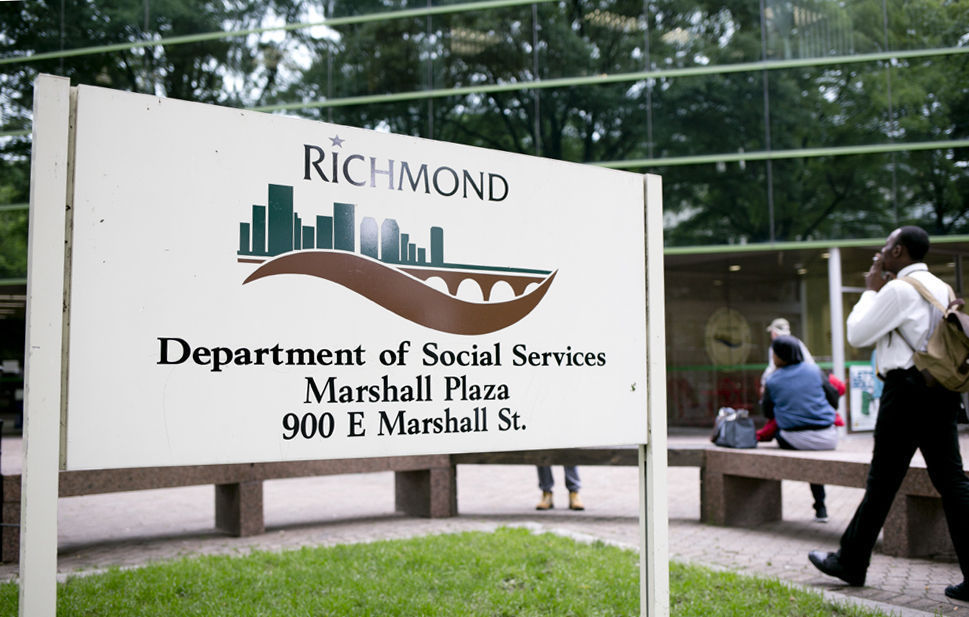
Richmond Mayor Dwight C. Jones’ administration is asking the City Council to sign off on a $2.7 million settlement to resolve a lawsuit in which 134 Department of Social Services employees say they were improperly denied overtime pay.

The suit expands on a similar lawsuit that covered 26 social services employees, which the city settled last year for $750,000.

The latest suit covers additional employees who weren’t party to the initial claim, but it also includes some employees who participated in the earlier suit but continued to not receive the overtime pay that they said they were entitled to after it was filed.

In total, the lawsuit covers a three-year period ending June 2015.

It is not clear how much money each of the employees will receive, and how much of the sum covers back wages as opposed to possible penalties or damages.

Craig Curwood, the attorney representing the employees, declined to comment on the pending settlement.

Jones’ press secretary, Tammy D. Hawley, also declined to comment.

“This is both a legal matter and a personnel matter, so we will not be offering any comment,” she said.

The plaintiffs in the case claimed they regularly worked more than 40 hours per week without overtime pay that they said they were entitled to receive under the Fair Labor Standards Act.

The lawsuits allege that caseworkers in the department had excessive caseloads, which required them to work through lunch breaks, at home after office hours and on weekends.

Managers in the department told the caseworkers “they do not have 40-hour-per-week jobs, and that they need to do whatever it takes to get their jobs done,” according to the latest filing.

To settle the case, the City Council will have to approve a budget amendment. A public hearing is scheduled for May 23.

The $2.7 million would come from the city’s revenue stabilization and contingency policy and be transferred to the city’s risk management office.

The administration is asking to transfer an additional $200,000 from that fund to the city’s Human Resources Department “for the purpose of conducting a citywide review and revision of the city’s job classification and compensation programs.”

That action appears to be aimed at making sure city employees are not improperly classified as ineligible for overtime.

That brings the total cost of resolving the issues to more than $3.6 million.

The issue is not the first wage dispute brought forward by municipal employees in the region.

In 2012, Henrico County paid $3.5 million to its police officers after they alleged the county was avoiding overtime pay be manipulating the way hours were recorded.

Richmond faced a similar issue in its Police Department in 2011, ultimately spending $7 million to settle a lawsuit over unpaid overtime filed by officers in the city.

Editor’s note: A potential settlement to a lawsuit alleging caseworkers in the city social services department were improperly denied overtime covers 134 employees. An article Thursday on page B1 reported the original number of employees in the suit, but others were added after its filing.

James H. Wallace

The city of Richmond quietly agreed to a $750,000 settlement earlier this year in a lawsuit brought by dozens of employees who claimed they were improperly denied overtime pay.

The suit, which involved current and former employees of the city’s Department of Social Services, was settled in late March, about one year after it was filed in federal court.

The city denied liability but agreed to pay $450,000 to 26 plaintiffs and $300,000 to cover their legal fees and costs. The payments, which cover a three-year window, range from $2,388 to $41,259.

The settlement, included in publicly available online records for the Eastern District of Virginia, contained a confidentiality clause that bars the plaintiffs from speaking publicly about its terms. The document contains specific instructions on how the plaintiffs must respond if contacted by the news media.

“If plaintiffs are asked about this lawsuit by anyone, including members of the press, plaintiffs will respond by saying, ‘The matter has been resolved,’ ” the agreement states.

Craig Curwood, the attorney representing the employees, declined to comment on the deal and said his clients were not available for interviews.

City officials also declined to comment.

The lead plaintiffs in the case, JoAnn Lewis and Luke Strong, claimed they regularly worked more than 40 hours per week without overtime pay that they say they were entitled to receive under the Fair Labor Standards Act.

Lewis and Strong said they were handling high workloads of child-protection cases that often required them to work from home after hours and on weekends.

Federal labor law includes some overtime exemptions for social workers.

The lawsuit, which did not seek a specific dollar amount, claimed the plaintiffs either were misclassified as exempt or were permitted to work overtime “off the clock.”

The city denied the allegations and insisted there had been no violation of labor law.

The suit also shed light on widely reported dysfunction in the Department of Social Services.

The caseworkers claimed that management had an official policy starting around 2008 to reduce the number of children placed in foster homes, even when children were determined to be “at risk of irreparable harm or death.”

City officials have acknowledged the problems in the agency and have enacted a series of leadership changes aimed at improving child-protection services.

Curwood also represented hundreds of current and former Richmond police officers in a 2012 overtime suit that resulted in a $7 million settlement..

The city retained an outside law firm, Ogletree, Deakins, Nash, Smoak & Stewart, to handle the lawsuit. It’s not clear how much those legal services cost.

The city payment register — recently published online as an open-government initiative — shows a $17,590 payment to the firm on May 27 for work on the case. The register does not include payments made before May 1.

The city also used the firm — which specializes in labor and employment law — to oversee the hushed departure last year of former Chief Administrative Officer Byron C. Marshall.

Richmond Police Department

After months of speculation, it is finally official: the City is settling a lawsuit with Richmond Police officers for unpaid overtime. We now know just how much money that settlement agreement could cost the city.

Right now, we’re looking at a figure of $7.16 million. That’s down from an original estimate of $38 million in overdue overtime. Nothing is set in stone just yet.

According to the proposed ordinance, $7 million will go to settle the lawsuit and $160,000 will go to the police department for other overtime compensation.

“I think it’s progress,” Richmond City Council President Kathy Graziano said.

You may remember this all started when about 500 Richmond Police officers sued the city, saying they weren’t getting paid the proper amount in overtime. Richmond was following a federal law, which says OT starts at 86 hours in a two-week pay period. Virginia law, however, requires overtime to start at 80 hours.

A judge decided the case had merit and will also have to approve the proposed settlement.

“We have reached a number that we feel is reasonable for both parties,” Graziano said. “Hopefully both parties will agree. Hopefully the judge will agree.”

We do not know the exact amount each individual officer will get. It varies depending on how many OT hours each worked. A source told NBC12 each officer got his or her settlement agreement Friday and has until July 20 to return it.

In the tough budget times the city is experiencing, many have wondered from where the money will come. The city has a risk management fund.

“We have money set aside for unusual events like storms or something of this nature,” explained Councilman Bruce Tyler.

A public hearing on this paper is scheduled for July 23. After this case is finished, city leaders say they must make sure the state law is being followed so we don’t end up right back here.

Richmond Police Department

The judge denied the city’s request Friday afternoon to dismiss part of a lawsuit filed by more than 500 city police officers for overtime pay.

It means the city could still be on the hook for 38 million dollars in back overtime pay. This lawsuit will now move forward, despite the city arguing it should be thrown out because federal law pre-empts state law.

A victory today for 500 retired and active city police officers trying to get back overtime pay. Judge Henry Hudson said today quote, “it would appear that the officer’s right to overtime compensation under the Virginia law was triggered…”

Richmond says it intends to fight the constitutionality of the 2005 law the suit is based on. It says officers will be paid time and half for every hour worked over 160 in a month-long pay period.

That’s a big difference from a federal law that mandates law enforcement be paid time and a half for anything over 171 hours.

Attorney General Ken Cuccinelli championed the state’s overtime law. He told NBC12 earlier this year- he does not believe there’s a misunderstanding here. He believes Richmond simply chose to ignore the law.

“There is a state law in place and there is a backstop of accountability but that local government is going to be driven up to the backstop and the way that happens is in court,” Cuccinelli said.

Craig Curwood, an attorney for the officers said this afternoon- “This is a great victory for our city’s police officers.” He goes on to say, “The court’s ruling today confirms that the city of Richmond cannot escape the law.” The city says it does not comment on pending litigation.

A jury trial is scheduled for June. Friday’s ruling does not directly address similar lawsuits filed by Henrico police officers and Richmond sheriff’s deputies, but all three cases are being heard by Judge Hudson.